All Issues
-
Trespassing in Plain Sight
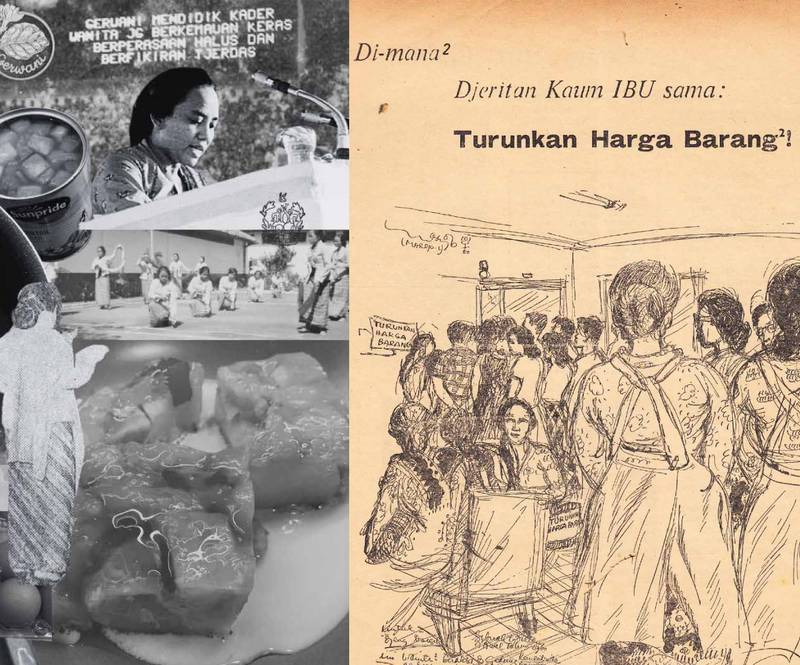
NO NIIN’s 36th issue features artists, collectives, and characters who outmanoeuvre the surveilling radar of hegemonic inertia, surviving and thriving through collaboration, subversion, and sisterhood. The opening essay recovers Gerwani’s vision of the kitchen as a political and boundary-crossing space based ideas drawn from ‘65 women’s prison memoirs, Api Kartini, and Memasak Harapan; another essay offers insight into how contemporary artists in Vietnam have adapted moving images into a language that activates intentional ambiguity; the third essay revisits Asia Magazine, the Hong Kong-based pictorial weekly that sought to show Asia to Asians through photography, colour pages and free distribution; in an interview, Marisa Srijunpleang’s delves into family memories connected to the Cambodian genocide; Womanifesto members recount the collective’s socially and politically embedded practices, discussing its philosophy and commitment to maintaining autonomy; a research paper anchors its exploration of worldmaking within the kaleidoscopic imagination of Minahasan artist Natasha Tontey; and a review unpacks and traces how cultural beliefs that may serve as charms to protect identities amid unpredictable change can inflict lasting harm.
-
Who Rests When the Pain Is Shared?
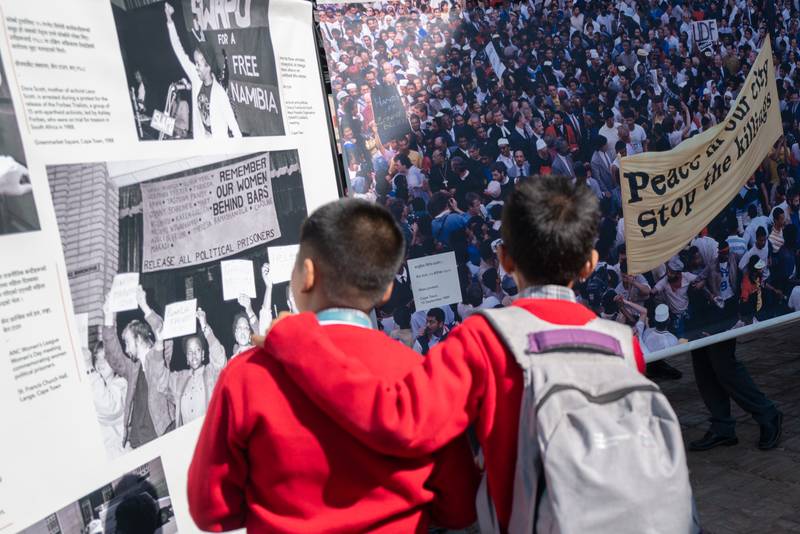
In NO NIIN Issue 35, we turn to the legitimacy crisis convulsing the art world as Israel’s genocide in Gaza forces a reckoning with complicity. The issue features a Venice Biennale 2026 dispatch on jurors strong-armed into resigning after trying to exclude Israel; an archive-turned-witness at Amsterdam’s IISH tracing five centuries of solidarity; a review of Rebellion for Future, embedding viewers in Finland’s climate movement; an essay on the diaspora artist’s uneasy status as an “eligible dissident”; an essay on firefighters battling Kurdistan’s Zagros wildfires; a testimony from a Baloch mother who has spent sixteen years demanding her disappeared son’s return; and an essay on Bint Jbeil, the town Israel tried to erase and Lebanon turned into a symbol of resistance; a review of PhotoKTM tracing resistance and solidarity through Nepal’s Gen-Z revolution; a review of steirischer herbst 25 on history as continuum, and a review of the Kochi-Muziris Biennale weighing its claims of friendship and collaboration against its labour practices and accountability; and an interview with Suraj Milind Yengde on the unfinished work of centring the anti-caste struggle.
-
To Make the Problem a Horizon of Counter-conduct
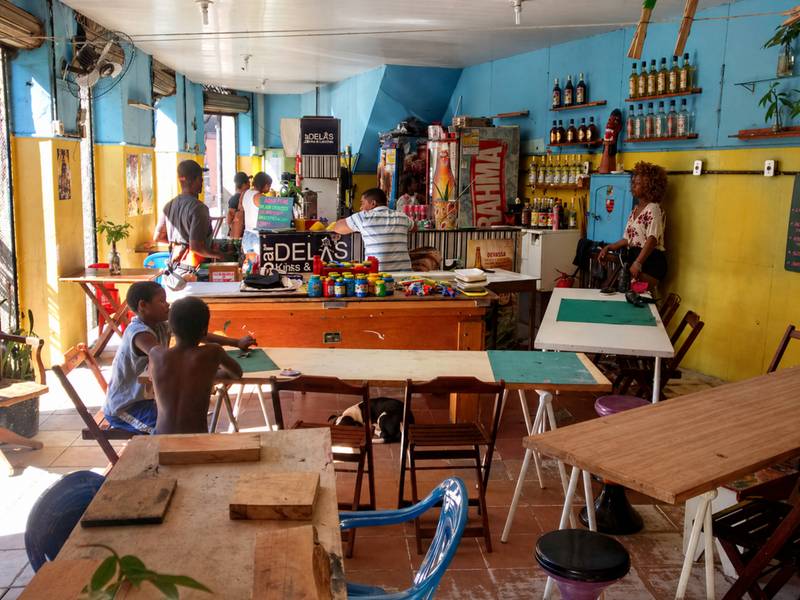
In our 34th issue, co-edited by NO NIIN and Celeste Magazine, we turn our attention to the art scenes of Brazil, particularly in São Paulo and Rio de Janeiro. The issue features a counter-colonial art studio in Rio’s Pequena África built on radical two-way alliance with historically excluded Black and Indigenous communities; a brotherhood that transforms Afro-diasporic traditions of mutual care into a philosophical framework; and an anti-Zionist Jewish institution that understands its neighbourhood as a co-author of its own history. Also included are a review of the 36th São Paulo Bienal probing the problem of universalism in mega-scale exhibitions, an exploration of Indigenous epistemologies being summoned through curatorial practice, and a ‘plagiarized’ interview with Dora Longo Bahia. The issue closes with an introspective reflection on 15 years of Celeste Magazine.